Arya News - Higher machinery, irrigation costs loom as Aman harvest, Boro season approach.
DHAKA – Amid the ongoing fertiliser crisis in many parts of the country, the government’s diesel price hike is set to push up farming costs, dealing another blow to farmers.
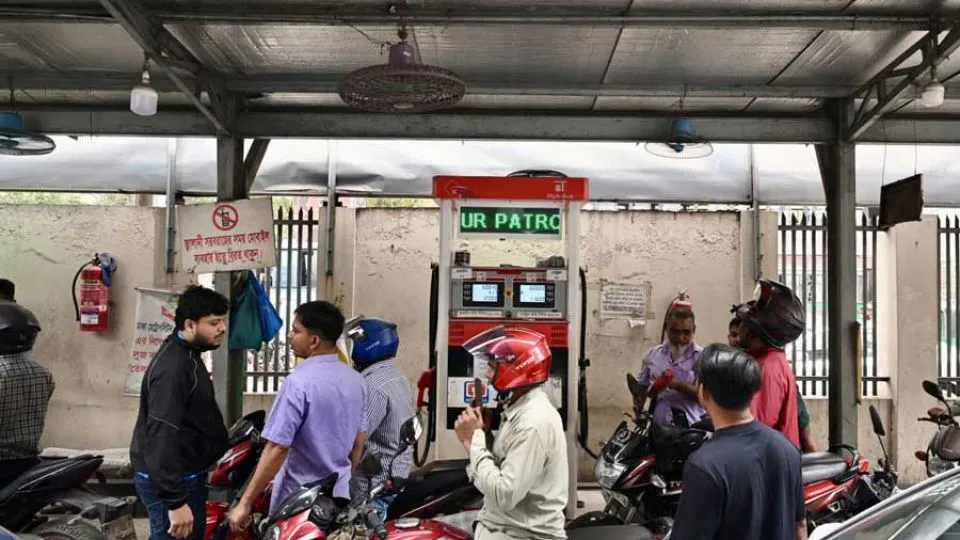
The government on Sunday raised the prices of four petroleum products, including diesel, by Tk 20 per litre, passing on higher import costs to consumers following the US war on Iran.
Diesel, the most widely used fuel for transport, irrigation and power generation, now costs Tk 135.
The hike comes as farmers are growing Aman paddy and preparing to harvest the country’s second-largest rice crop from November, when the cost of operating diesel-run combine harvesters and threshers will also rise.
The next crop season is Boro, during which farmers rely heavily on machinery for tilling, cultivating, irrigation, harvesting, and threshing. Boro accounts for 55 percent of the country’s annual rice production.
Bangladesh has more than 21 lakh units of farm machinery, including 3.8 lakh power tillers and over 12 lakh diesel-run irrigation pumps, used mainly to produce the dry-season Boro crop.
Together, farm machinery consumes roughly 12.55 lakh tonnes of diesel, according to an estimate by the Bangladesh Petroleum Corporation, which says agriculture accounts for more than 15 percent of the country’s annual fuel consumption.
Farmers said the diesel price hike will turn into a high cost for tilling, cultivating, irrigation, harvesting and threshing services.
They fear they will have to shoulder higher costs, particularly from November, even as prices of the staple grain decline.
Yesterday, coarse rice was selling for Tk 50-55 per kilogramme at retail in Dhaka, down from Tk 55-60 a kg a year earlier, according to data from the Trading Corporation of Bangladesh.
Bablu Molla, a farmer from Jhenaidah’s Harinakundu upazila, said, “We will have to bear the brunt of the diesel price hike. I am already worried about it. I do not know how I will cover the extra cost.
“With fuel prices rising, everything else will get more expensive too…”
He said Boro requires extensive irrigation, and the sudden Tk 20-a-litre hike will sharply increase production costs. Yet farmers have not received fair prices for their rice over the past two seasons, forcing many to sell at a loss. He said many farmers might scale back farming.
Amzad Hossain, 65, a farmer from Madhupur village in Rangpur’s Kaunia upazila, said, “If crop prices do not increase, the rise in diesel prices will force us to incur losses.”
Hamidul Islam, 60, a farmer from Karnapur village in Lalmonirhat Sadar, said, “It is impossible to think of farming without diesel. The diesel price hike will directly affect farmers’ lives and livelihoods.”
Economists said higher farming costs could ultimately affect overall production and further fuel already high and persistent inflation. They recommended cash assistance and targeted diesel subsidies for farmers.
Agricultural economist Jahangir Alam Khan said that given the country’s current situation, incentives or subsidies are essential to help farmers cope with the rising costs.
“As production costs climb, many farmers will be unable to bear the extra expense, which may pose a threat to food security.”
Md Rostom Ali, professor at the Department of Farm Power and Machinery at Bangladesh Agricultural University, said farmers have limited control over input prices and often receive relatively low returns from agricultural production, so higher fuel costs could put further pressure on their profit margins.
He said farmers may have to cut spending on other inputs or adjust farming practices to cope with the higher costs, which could ultimately hurt agricultural productivity and household incomes.
(Our Rangpur and Jhenaidah correspondents contributed to this report.)