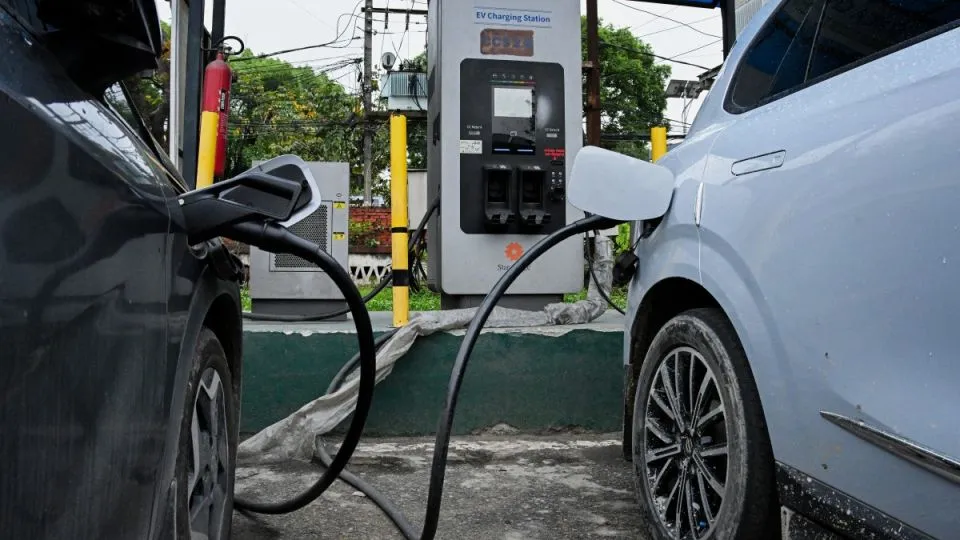
Arya News - Bangladesh authorities have been urged to implement a proper system for collecting, recycling, and safely disposing of used electric vehicle (EV) batteries – especially following the rising use of battery-powered vehicles seen across the country.
DHAKA – Bangladesh needs a proper system for collecting, recycling and safely disposing of used electric vehicle (EV) batteries, according to stakeholders, as an increasing number of battery-powered cars take to the roads with government tax and import duty incentives designed to promote environmentally friendly transport.
The government has set a target of raising EVs to 30 percent of all vehicles by 2030 as part of efforts to cut carbon emissions, and has offered incentives to encourage local manufacturing of EV components.
Banning reconditioned EVs ignores what really matters — independent inspection and certification of battery health and safety, not the vehicle’s age alone.
Abdul Haque President, BARVIDA
Against this backdrop, a proper battery management policy has become urgent, so that batteries are not dumped haphazardly and do not add to pollution and public health risks, stakeholders said at a discussion titled “Should the Government Allow Old EV Imports?” at The Daily Star Centre yesterday.
At the discussion, Abdul Haque, president of the Bangladesh Reconditioned Vehicle Importers and Dealers Association (BARVIDA), said the government should allow used EVs that meet defined safety and battery-health standards.
Restricting reconditioned imports while allowing brand-new foreign EVs makes no sense. Both are imports, and government policy shouldn’t create a monopoly.
Riaz Rahman Secretary general, BARVIDA
The discussion followed a series of BARVIDA-led programmes, including a nationwide shop shutdown last week, calling on the government to reconsider its ban on used and old EV imports. Citing affordability for middle-income buyers, BARVIDA wants to import reconditioned EVs up to five years old, with a minimum battery life of 70 percent.
“Why should we shut the door when other environmentally conscious countries allow used EVs under specific conditions?” Haque said at the discussion, the fourth in the “Business & Beyond” series.
Bangladesh must choose between building a real domestic EV industry, or allowing shifting the financial and environmental burden of ageing batteries onto itself.
Mir Masud Kabir MD, Bangladesh Auto Industries Ltd
For many middle-income households, he said, reconditioned vehicles offer a more affordable route to private transport. The sector also supports thousands of workers, including mechanics, technicians, drivers, traders and spare-parts suppliers.
Haque said vehicle age alone should not determine whether an EV is fit for import. Instead, an independent inspection and certification system could assess a vehicle’s safety and battery condition before it is shipped in.
This isn’t new-versus-reconditioned, it’s the whole ecosystem. Battery chemistry and charging habits matter more than a vehicle’s age or origin
Anisuzzaman Talukder Professor, BUET
He, however, acknowledged that battery disposal remains a major problem, as the country does not yet have a comprehensive system for collecting, recycling and safely disposing of used EV batteries.
At the programme, while discussants differed over whether used EV imports should be restricted, they agreed that Bangladesh needs clearer rules on battery safety, recycling, charging infrastructure and the development of a domestic EV industry.
Battery management, they said, is necessary not only for imported reconditioned cars but also for locally manufactured EVs, and for managing the e-waste generated by at least 50 lakh battery-run three-wheelers already on the road. Batteries are also widely used in IPS systems, solar installations and energy storage. Yet no comprehensive, regulated system exists to manage them at the end of their useful life.
Haque said any EV policy must address the entire battery life cycle, rather than focusing solely on vehicle imports.
BARVIDA is not opposed to new vehicles or local manufacturing, he added, but called for tax and tariff policies that maintain a level playing field between locally produced and imported vehicles.
He also said Bangladesh would need more charging stations, trained technicians, battery-repair facilities and proper end-of-life battery management before EVs could become a mass-market option.
According to sources at Bangladesh Road Transport Authority (BRTA), more than 700 EVs were registered in Bangladesh as of July this year.
BARVIDA Secretary General Riaz Rahman said EV batteries, typically carrying a warranty of around two years, could last 15 to 20 years with proper maintenance. Used batteries could also have a second life in IPS systems, solar power setups and some generators.
Riaz questioned why restrictions are being imposed for reconditioned EVs, warning against government policy that created a monopoly.
“If importing a reconditioned vehicle is the problem, then a brand-new imported EV is also an import,” he said.
Riaz said Japan’s reconditioned vehicle sector has built an extensive network of mechanics, technicians, spare-parts suppliers and other service providers over five decades, and questioned whether Bangladesh could meet its 2030 EV target without giving consumers more choices, including plug-in hybrids.
Mir Masud Kabir, managing director of Bangladesh Auto Industries Ltd (BAIL), took a different view, saying Bangladesh must decide whether it wants to build a domestic EV industry or remain primarily a market for used foreign vehicles.
Large-scale imports of used EVs, he said, could shift the environmental and financial burden of ageing batteries onto Bangladesh.
“Japan requires manufacturers to take responsibility for battery recycling, but that responsibility could eventually fall on the importing country once ageing vehicles are exported,” he added.
Masud gave a hypothetical example of a $12,000 used EV multiplied across 10,000 vehicles would send around $120 million abroad. Investing a similar sum in domestic EV manufacturing, he argued, could generate value instead through production, employment and exports.
He acknowledged that Bangladesh’s EV industry remains at an early stage but said local capacity could be developed over time. He also pointed to India, Thailand and Indonesia, where governments are encouraging EV manufacturing while restricting used EV imports.
Battery condition is another concern, Masud said, as degraded batteries could leave consumers facing costly replacement bills and undermine confidence in EVs.
He also cautioned about charging standards, noting that many Japanese EVs use CHAdeMO, a Japanese-developed system, while Bangladesh has adopted CCS2 (Combined Charging System 2). Improvised connections between incompatible systems, he warned, could create safety risks.
Muhammad Anisuzzaman Talukder, a professor of the Electrical and Electronic Engineering Department at the Bangladesh University of Engineering and Technology (BUET), said the debate should not be reduced to new versus reconditioned vehicles.
“The whole ecosystem needs to be considered,” he said.
Anisuzzaman said much of the existing lead-acid battery recycling in Bangladesh is informal, creating environmental and health risks.
He suggested introducing a battery passport to track batteries throughout their life cycle, and called for greater responsibility from manufacturers and importers over battery management and recycling.
The BUET professor said battery chemistry, charging practices, temperature and power quality all affect battery life. “A new vehicle does not automatically mean a better-quality vehicle,” he added.
Rather than a blanket ban, he favoured clear battery-health standards, suggesting reconditioned EVs with at least 80 percent battery state of health should be allowed for import, subject to proper certification.
Wider EV adoption, he said, would also require more charging stations, stronger grid capacity and skilled technicians.
Arun Devnath, deputy editor of The Daily Star, moderated the discussion.