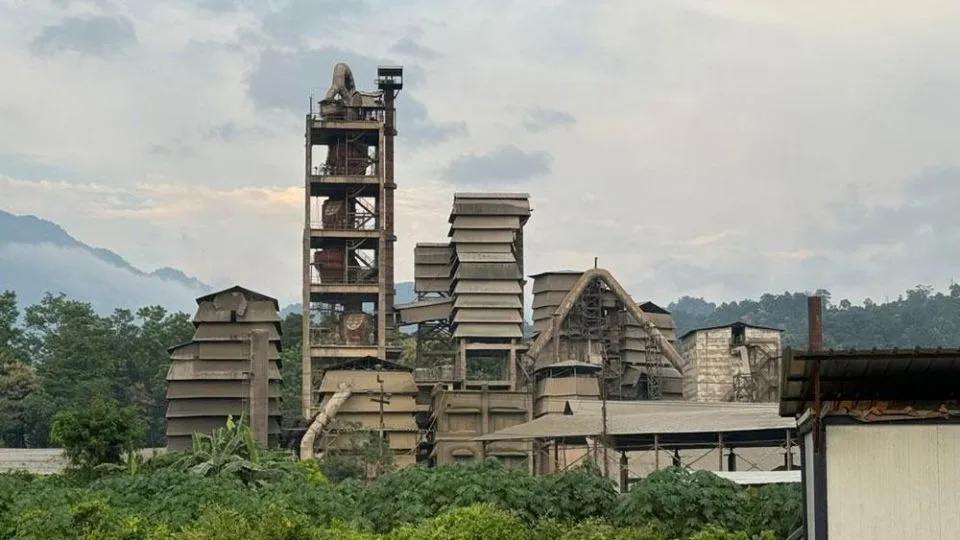
Arya News - A prolonged coal shortage triggered by transport restrictions in West Bengal, India has forced two major cement factories in the country to suspend operations and reduce clinker production, raising concerns over job losses and wider disruptions to industrial production.
THIMPHU – A prolonged coal shortage triggered by transport restrictions in West Bengal, India has forced two major cement factories in the country to suspend operations and reduce clinker production, raising concerns over job losses and wider disruptions to industrial production.
Lhaki Cement and Penden Cement Authority Limited (PCAL), both based in Gomtu under Phuentshopelri Gewog, have halted or reduced production after coal supplies transported through West Bengal were disrupted.
The restrictions have also affected the transportation of Low Ash Metallurgical Coke (LAMC), a primary raw material for ferroalloy industries.
Industries in Samtse and Pasakha are facing difficulties securing raw materials as their supplies from India depend on routes through West Bengal.
Coal is the primary fuel used in clinker production, the most energy-intensive stage of cement manufacturing. The process involves heating limestone, clay and other raw materials in a rotary kiln to produce clinker, which is then ground with gypsum and other materials to make cement.
An official from Lhaki Cement said the clinker plant had been shut down since September 7 due to the shortage. “We are almost two months without coal. The coal that we were getting from the Northeast is no longer coming because West Bengal is not allowing it to enter Bhutan.”
The company has tried sourcing coal from Jharkhand and other areas. However, the quality did not meet the company’s requirements.
“We brought several truckloads, but the coal did not meet our quality requirements,” the official said.
Even Bhutanese coal supplied through State Mining Corporation Limited (SMCL) is reportedly being stopped from passing through West Bengal, further affecting supplies to the factories.
Lhaki Cement managed to import one consignment of coal from Russia through Haldia Port. The company received about 510 tonnes, but the stock has already been exhausted. The next shipment is expected to arrive only by mid-December.
Before the complete disruption, the company had reduced clinker production. Although the plant can produce 450 tonnes of clinker a day, production had fallen to about 150 to 200 tonnes.
Coal prices had also been increasing since February, making production increasingly expensive.
Companies initially reduced production to about 50 percent of capacity, the minimum level at which some could sustain operations. However, with supplies now disrupted altogether, factories have had to suspend production.
The shortage is also affecting workers. Lhaki Cement’s management is exploring ways to protect employees, including engaging them in other activities within sister companies.
However, company officials said such arrangements could only be sustained for one or two months.
Finding alternative work for employees is difficult because cement production requires specialised technical workers.
If the shortage continues for another one or two months, the companies may have to consider retrenching employees.
Penden Cement Authority Limited has also suspended its clinker operations.
“Our plant is shut down until November 10, and it will remain shut in case the coal shortage continues. We will be able to tell clearly after that,” a company official said.
The company is exploring alternative sources of coal, although finding suitable supplies remains difficult.
Despite the shortage, cement prices have not increased so far.
Other industries that depend on coal are also facing difficulties.
Jigme Flux, which is involved in calcining dolomite, has reduced production because of inadequate coal supplies from SMCL.
“Our plant has a capacity of 300 tonnes a day. However, because we are not getting enough coal, we have reduced production to 190 tonnes a day,” a source said.
The cost of coal has also increased sharply. The company previously received coal at Nu 10,000 to Nu 12,000 a tonne, delivered to its factory. The price has now reached nearly Nu 24,000 a tonne.
Although market demand for its products remains high, the company is struggling to meet supply commitments.
Industries with existing supply agreements are expected to deliver materials as committed. However, the shortage has put some orders at risk.
“We are now at risk of losing orders because we cannot meet their requirements,” the source said.
The company has informed clients about the shortage, and some have extended delivery deadlines by one or two months. However, officials said such extensions could not continue indefinitely.
Some industries have explored transporting coal through Gelephu and Samdrupjongkhar as alternative routes. However, transportation costs through these routes are expected to remain high.
Government intervention sought
Industry officials say the government should intervene to ensure that coal already in Bhutan, particularly domestic coal supplied through SMCL, is allowed to move through Indian territory to other parts of the country.
They refer to the India-Bhutan Agreement on Trade, Commerce and Transit, which provides for the movement of goods from one part of Bhutan to another through Indian territory, subject to prescribed transit procedures.
Industry representatives say the restrictions are affecting even coal that has entered Bhutan and is being transported through India to another part of the country.
They said resolving the transit issue could help industries sustain operations while alternative supplies are arranged.
Some industry promoters have also questioned the quality of coal supplied by SMCL. Kuensel could not independently verify the allegations.
Industries continue to depend on imported coal because domestically supplied coal does not always meet their production requirements.
Some have suggested that the government ensure SMCL supplies coal of suitable quality or consider allowing industries to obtain captive mining rights to operate their own mines.
The Association of Bhutanese Industries has raised the issue of shortage of both coal and LAMC with the government on October 14. The association is currently awaiting a decision.