Arya News - An FTA with the EU is expected to unlock as much as $12 billion in export potential for the Philippines.
MANILA – A decade after negotiations began, the Philippines and the European Union (EU) have finally concluded talks on a landmark free trade agreement (FTA), opening the door for Philippine goods to further penetrate the 450-million-strong European market and vice versa.
Philippine Trade Secretary Cristina Roque and EU Commissioner for Trade and Economic Security Maroš Šefčovič reached a breakthrough in negotiations following a teleconference, both sides announced in a joint statement on Tuesday.
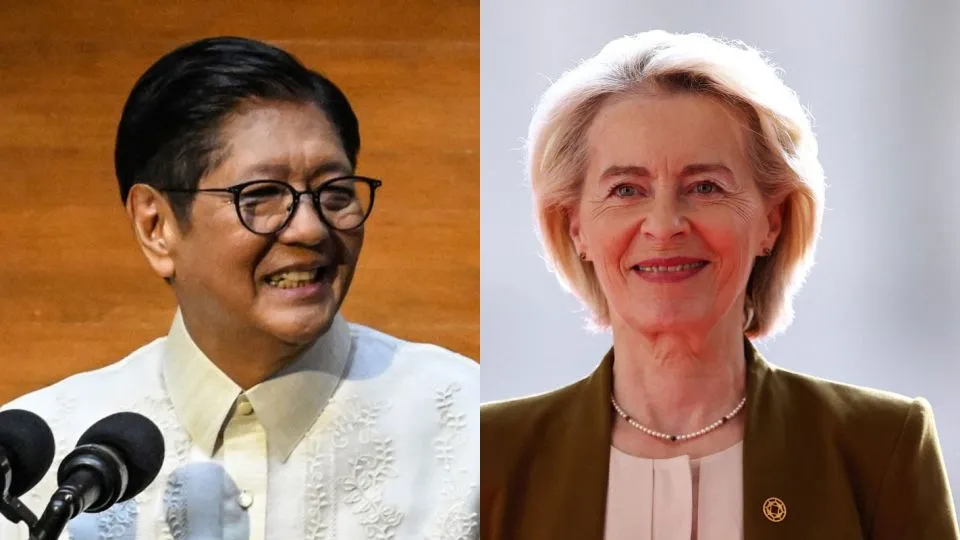
President Marcos and European Commission President Ursula von der Leyen likewise spoke by phone on Monday to discuss the “mutually beneficial agreement” expected to “bring tangible benefits, including new opportunities for businesses, more investment and more jobs.”
“The agreement also sends a clear signal of reinforced engagement between the EU and the Philippines, anchored in their common interest in an open, inclusive, and rules-based international order in the current volatile context,” read the joint statement by Roque and Šefčovič.
EU Ambassador to the Philippines Massimo Santoro said there remain “specific residual” issues in the free trade pact, but it is nevertheless “essentially concluded” since the main political elements of the deal have been agreed upon.
The next steps include the legal scrubbing of the text and eventual ratification, Santoro said.
‘World-class’ deal
An FTA with the EU is expected to unlock as much as $12 billion in export potential for the Philippines.
It would also upgrade the Philippines’ current trade arrangement under the EU’s Generalized Scheme of Preferences Plus, which grants preferential market access to more than 6,000 Philippine product lines and is set to expire by 2027.
The agreement also makes the Philippines only the fourth Southeast Asian country to secure an FTA with the EU, after Singapore, Vietnam, and Indonesia.
Both sides said the deal is expected to create fresh trade opportunities for businesses, farmers, and manufacturers, while helping build more diversified supply chains as a “strategic priority.”
The landmark FTA also sets “fair rules and real predictability” anchored on a shared commitment to a more stable global economy.
“After years of rigorous dialogue, we now have a world-class framework that establishes a predictable foundation for trade and investment,” European Chamber of Commerce of the Philippines president Diana Edralin said in a statement.
Signed by 2027
“For the Philippines, securing this agreement as a pioneer in Asean demonstrates our economic resilience and readiness to compete globally,” Edralin added.
Ferdinand Ferrer, president of the Philippine Chamber of Commerce and Industry, echoed that call, saying the deal’s “timely ratification of the agreement will be crucial in unlocking its full benefits and ensuring that Philippine businesses can compete more effectively in the European market.”
Von der Leyen is set to visit the Philippines in 2027 for the signing of the FTA.
Edralin urged both sides to fast-track the remaining processes to maximize its economic gains.
“Ensuring an expedited legislative approval in both the Philippine Congress and the European Parliament will allow our business communities, workforce, and consumers to realize the full economic dividends of this historic pact without delay,” she added.
Negotiations for the Philippines-EU FTA began in 2016 under then President Rodrigo Duterte, whose deadly drug war fueled human rights concerns that became one of the factors that stalled the talks.
Cleaner, digital economies
After just two negotiating rounds during Duterte’s term, the deal was mothballed before Marcos and von der Leyen agreed in 2023 to explore restarting the negotiations. Formal talks eventually resumed in 2024.
In its readout of the Marcos-von der Leyen call, the European Commission said the proposed agreement would also support sustainable development and the transition toward cleaner and digital economies.
The commission said the two leaders also underlined the importance of working with like-minded partners to maintain “open, fair, and predictable trade” amid what it described as a challenging geopolitical and geoeconomic environment.
Von der Leyen congratulated Marcos on the Philippines’ chairmanship of Asean this year and reiterated the EU’s commitment to pursuing similar free trade agreements in the region.
She said the prospective Philippines-EU deal would send an important signal ahead of the 50th anniversary of EU-Asean relations in 2027.
Von der Leyen also expressed the EU’s solidarity with the Philippines “in the face of aggressive maritime claims”—hinting at China’s expansive claims over the South China Sea, including the West Philippine Sea—and reaffirmed the bloc’s continued support for the Philippines’ position.
The arrival of US President Donald Trump in 2025 and his tariff blitz jolted the EU into cultivating trade ties around the world. Brussels has since signed deals from South America to Australia and is seeking more agreements. — With a report from AFP INQ