Arya News - Ahead of President Xi Jinping’s summit with US President Donald Trump in Washington, Beijing has reiterated its “four red lines” that it says must not be challenged: Taiwan, democracy and human rights, China’s development paths and political system, and its right to development.
PHILADELPHIA – While US President Donald Trump is “Chinamaxxing”, rolling out the red carpet for Chinese President Xi Jinping’s first White House visit in more than a decade, US analysts are wondering where the US will draw a line.
An elaborate White House arrival ceremony is planned for the morning of Sept 24 for the Chinese President, with military bands and fighter jet flyovers. Then, the two leaders are expected to hold bilateral discussions.
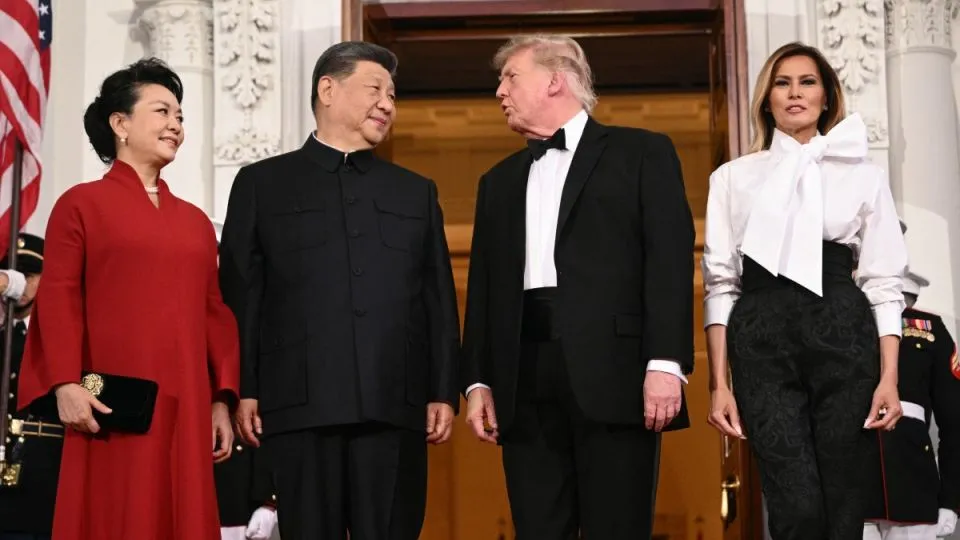
While their husbands talk, Melania Trump has planned a visit to the Smithsonian National Museum of Asian Art with Xi’s wife Peng Liyuan. The day will conclude with a ceremonial state dinner.
A day before Xi landed in Washington DC, China’s US Ambassador Xie Feng reminded the hosts what China’s red lines are during the visit.
“China’s sovereignty, security and development interests cannot be violated, and four red lines – the Taiwan question, democracy and human rights, development paths and systems, and development rights – cannot be challenged,” he said in a Sept 23 op-ed for the official People’s Daily.
These are well-rehearsed Chinese positions that are often aired before, during and after visits by key US officials. Xi had outlined them himself in November 2024 when he met then President Joe Biden in Lima.
If those are China’s red lines, what is the US asking China to stop doing?
“The United States has not as clearly stated its own red lines; we could try to infer them,” said Kelly Grieco who studies US foreign policy at the Stimson Center.
The Iran war would be at the top of the list. China buys Iranian oil and reportedly supports Iran’s war effort. Analysts are watching to see whether Beijing offers to mediate and what it seeks from Washington in return.
A second would be China’s control over the export of rare earths, the elements essential in manufacturing everything from phones to missiles. But despite having officially suspended strict export controls on rare-earth elements, Beijing has constricted supplies to US companies.
Typically, the red lines are related to China’s industrial policy, its desire to reunify Taiwan, the South China Sea disputes, and human rights, said Scott Kennedy, a China analyst at the Washington-based Center for Strategic and International Studies.
Those items are hard to find in the Trump administration’s approach now, he added. “Instead, they want an avoidance of war. They want to keep markets up, and anything that makes President Trump look good. Very different kinds of red lines that the US now has than in the past.”
Grieco said she did not see a radical departure from the US red lines, pointing out that the Trump administration has opposed Chinese coercion in the South China Sea, including reaffirming its defence commitments to the Philippines, maintaining joint maritime patrols, and conducting military exercises.
“On maritime disputes and China’s support for Iran, I’d look more closely at actual policy decisions rather than changes in rhetoric,” she said.
“Some analysts are conflating the administration’s effort to avoid needlessly provocative rhetoric with a substantive retreat from US commitments. Those are two very different things,” she added.
It would not hurt if both countries talked more openly about their red lines.
“Clarifying the two sides’ red lines could be helpful to stabilise relations, particularly to avoid misperceptions and the dangers of accidental or inadvertent escalation,” she said.
Read More:
A diplomatic split screen as US President Trump and Chinese counterpart Xi meet
Chinese President Xi calls for steady US-China ties, healthy competition during White House address
US President Trump hails their ‘great friendship’, but does Chinese counterpart Xi feel the same?